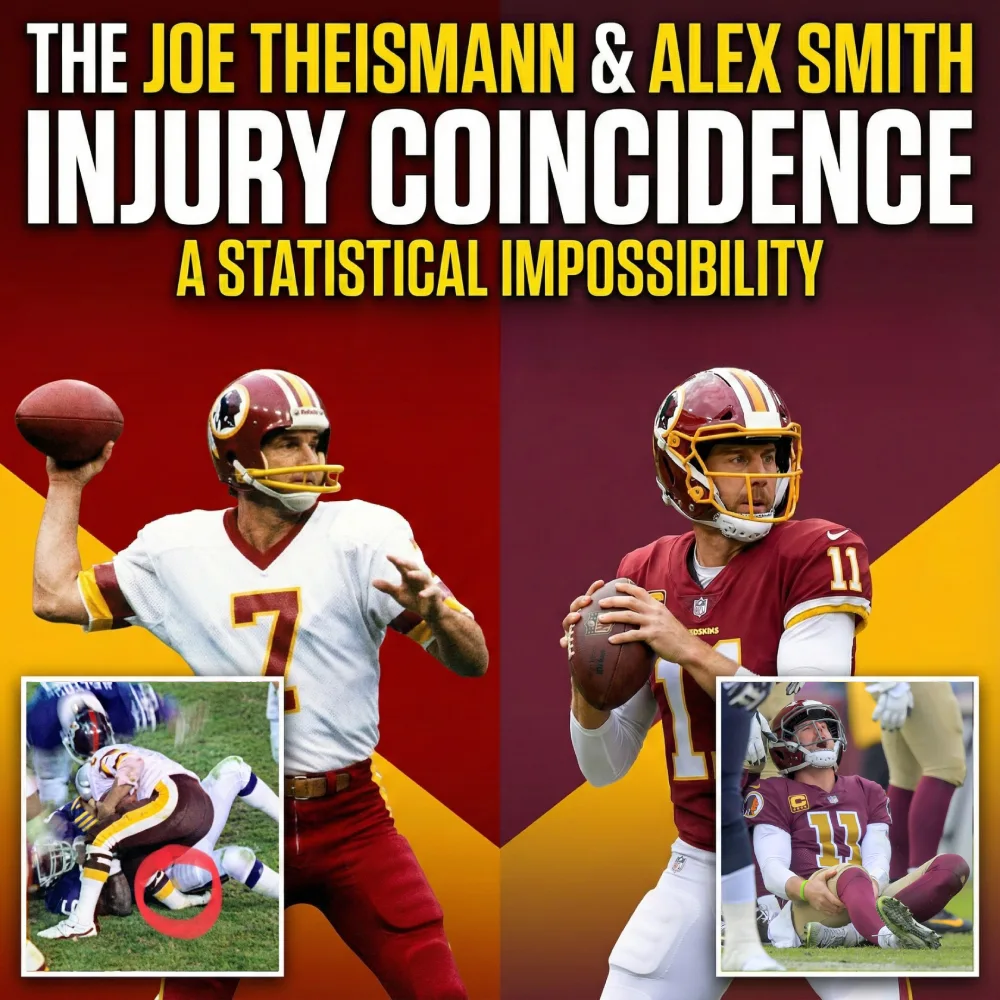

The Joe Theismann and Alex Smith injury coincidence is widely considered the most impossible statistical anomaly in NFL history. On November 18, 1985, Theismann suffered a compound fracture of his right leg. Then, exactly 33 years later to the day, Alex Smith suffered the exact same injury, on the same field, with the same final score.
The link between Joe Theismann and Alex Smith isn’t just a statistical oddity. It seems more like a glitch in the matrix.
For thirty-three years, Washington fans looked back at November 18, 1985; thinking it was a singular tragedy, a “where were you when” moment that could never be replicated.
We were wrong.
On November 18, 2018, history repeated itself.
The Monday Night That Changed Everything
To understand the weight of this so called curse, you have to go back to the night it was born.
November 18, 1985. Monday Night Football.
The atmosphere in Washington D.C. was electric, bordering on hostile. The New York Giants were in town, and during the mid-80s, the NFC East was no less than a war zone.
Joe Theismann was the king of the city. He wasn’t just a quarterback; he was a celebrity. He had the Super Bowl ring, the movie-star looks, and the single-bar facemask that became his trademark. He was 36 years old, perhaps a step slower than his prime, but he was still the leader of a team that believed it could beat anyone.
Then there was the man on the other side of the line; Lawrence Taylor.
Taylor wasn’t just a linebacker. He was a force of nature in a size 56 jersey. He changed how the game was played. Offensive coordinators didn’t sleep the week before playing the Giants because of him. On this night, Taylor was hungry.
The play was designed as a “flea-flicker,” a clever strategy intended to surprise the aggressive Giants defense. However, from the start, it was clear that the plan was flawed. The Giants remained unfooled, and the offensive line quickly crumbled under pressure.
Hall of Fame linebacker Harry Carson seized the opportunity, wrapping his arms around quarterback Joe Theismann from the front. Despite being held, Theismann struggled to escape, desperately scanning the field for an open receiver. In that moment of distraction, he failed to notice the swift figure approaching from his blind side. Lawrence Taylor, renowned for his explosive style of play, launched himself at Theismann with incredible force.
Instead of merely tackling him, Taylor barreled through, delivering a crushing blow that would change the course of the game.
“Like Two Muzzles Going Off”
The sound is what people remember.
In the broadcast booth, Frank Gifford, O.J. Simpson, and Joe Namath went quiet. On the field, players from both teams stopped playing before the whistle even blew.
Theismann later described the sensation not as pain, but as an explosion. “It sounded like two muzzles going off next to my ear,” he said. “Pow! Pow!”
Taylor’s knee had driven directly into Theismann’s lower right leg, acting as a fulcrum. The force was too much for the human body to withstand. The tibia and fibula snapped instantly. One bone was driven down, the other up. It was a comminuted compound fracture, meaning the bone had shattered and pierced the skin.
What happened next became the defining image of sportsmanship in the 1980s. Lawrence Taylor, the “bad boy” of the NFL, the man who played with a terrifying violence, immediately popped up. He didn’t celebrate the sack. He didn’t taunt. He clutched his helmet with both hands and screamed for the medical staff, frantically waving them onto the field. He couldn’t look. He turned away, pacing nervously. He knew he had just ended a career.
As Theismann was loaded onto the cart, the crowd at RFK Stadium rose for a standing ovation. It wasn’t a cheer for a touchdown; it was a goodbye.
The final score that night was Washington 23, Giants 21. Washington won the game, but they lost their soul.
The 33-Year Silence
For the next three decades, the franchise wandered through the wilderness. They won a Super Bowl with Doug Williams and another with Mark Rypien, but the quarterback position was never truly stable. It became a revolving door of hope and failure. Heath Shuler. Patrick Ramsey. Jason Campbell. Robert Griffin III.
Then came Alex Smith.
In 2018, Alex Smith was the adult in the room. He wasn’t flashy. He wasn’t the savior RGIII was supposed to be. But he was solid. He was a winner. He had Washington sitting at 6-3, atop the NFC East. For the first time in years, the team felt professional.
November 18, 2018, rolled around. It was a Sunday, not a Monday, but the feeling in the air was tense. The Houston Texans were visiting FedEx Field.
Sitting in a luxury suite that day was Joe Theismann. He was there to celebrate the anniversary, to wave to the fans, to be the living legend. He had no idea he was about to watch his own nightmare replay in 4K definition.
The Ghost on the 40-Yard Line
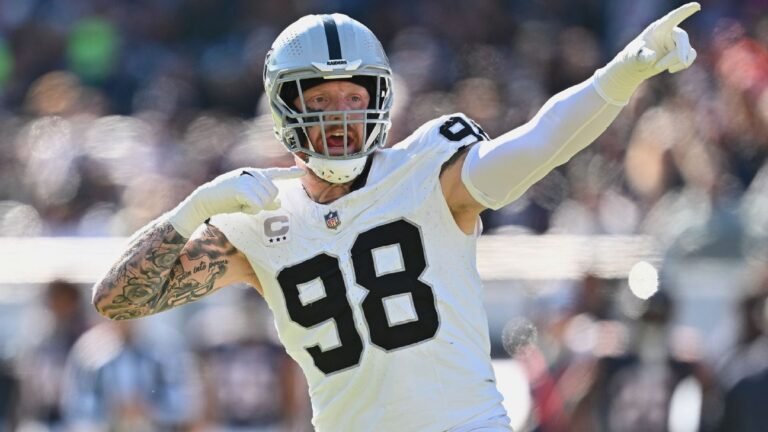
The game was a grinder. The Texans defensive front, led by J.J. Watt; a three-time Defensive Player of the Year, just like Lawrence Taylor, was wreaking havoc.
Midway through the third quarter, Washington was trailing. Alex Smith dropped back to pass. He was looking for an outlet. The protection broke down.
Kareem Jackson arrived first, slowing Smith down. Then came J.J. Watt.
Watt wrapped his arms around Smith’s waist and swung him to the turf. It wasn’t a dirty hit. It was a standard, routine sack that happens ten times every Sunday. But as they went to the ground, Smith’s right cleat caught in the grass.
His body kept rotating. His lower leg did not.
From the stands, it looked like a normal tackle. But on the field, the reaction was immediate. Smith rolled over, ripped his chinstrap off, and stared at the sky. He didn’t scream. He went into shock almost instantly.
The television cameras zoomed in, and millions of viewers recoiled in horror. His right leg was bent at an impossible angle, halfway between the knee and the ankle. It was loose. It was broken.
Up in the suite, Joe Theismann watched the monitor. He turned to his wife. His face went pale. “That’s exactly like mine,” he whispered.
He texted a friend moments later: “It’s eerie. I feel so bad for him.”
The Terrifying Math of the Coincidence
In the hours after the game, Reddit threads and Twitter feeds began to light up. At first, it was just the date. “Did you know today is the anniversary of Theismann’s injury?”
But as stat-heads and historians dug deeper, the parallels shifted from “weird” to “impossible.” If you wrote this in a movie script, the studio would reject it for being too lazy.
- The Date: November 18. Both of them. 33 years apart exactly.
- The Yard Line: In 1985, the ball was snapped at the 39-yard line. Theismann was driven back and hit right around the 40. In 2018, Smith was snapped at the 39. He was hit right around the 40.
- The Score: The final score of the 1985 game was Washington 23, Giants 21. The final score of the 2018 game was Texans 23, Washington 21. The numbers on the scoreboard were identical, just flipped.
- The Defenders: Theismann was taken out by the greatest defensive player of his generation (Lawrence Taylor, 3x DPOY). Smith was taken out by the greatest defensive player of his generation (J.J. Watt, 3x DPOY).
- The Missing Protection: In both games, the starting Pro Bowl Left Tackle was missing due to injury. In ’85 it was Joe Jacoby. In ’18 it was Trent Williams. The blind side was vulnerable in both timelines.
- The Opponent: While the teams were different, the running backs were eerily linked. In 1985, the Giants’ running back was Joe Morris, wearing number 26. In 2018, the Texans’ running back was Lamar Miller, wearing number 26.
It was a perfect storm of data points. A repetition of history so precise that it felt engineered.
The Fight for the Leg
While the internet marveled at the coincidence, Alex Smith was entering a fight for his life.
Joe Theismann’s injury ended his career, but his leg healed relatively straightforwardly. Smith was not so lucky. The break had pierced the skin, introducing bacteria into the wound.
In the days following the surgery, Smith’s leg turned black. He developed necrotizing fasciitis—flesh-eating bacteria. It is a condition that kills people.
Smith wasn’t fighting to play football anymore; he was fighting to keep his leg, and then, to keep his life. Doctors performed 17 surgeries. They had to cut away most of the muscle from his shin and calf. At one point, they recommended amputation.
Smith refused. He chose the long, painful road of limb salvage. He spent months in a metal cage—an external fixator drilled into his bones. He had to learn to walk again. He had to learn to trust a leg that was essentially reconstructed from muscle taken from his thigh and shoulder.
The Divergence
This is where the stories of the two quarterbacks finally split.
Joe Theismann never played again. He became the voice of the game, a successful broadcaster who owned his moment in history. He talked about the injury openly, using it as a teaching moment about resilience and life after football.
Alex Smith decided he wasn’t done writing his story.
Against every medical opinion, against the wishes of his own family at times, he returned to the field. In 2020, wearing a titanium brace under his sock and a “drop foot” brace to lift his toes, Alex Smith took a snap for the Washington Football Team.
It remains arguably the greatest comeback in the history of professional sports. He didn’t just stand there; he won games. He led a broken team to an unlikely playoff berth. He proved that while the curse could break his bone, it couldn’t break his will.
The Brotherhood of the Broken
Today, Joe Theismann and Alex Smith share a bond that no other two players in history share. They are the only members of the “November 18 Club.”
They have met several times since. Theismann has been a vocal supporter of Smith, marveling at the younger quarterback’s ability to do what he couldn’t—return to the gridiron.
“I didn’t think he could do it,” Theismann admitted in interviews. “I didn’t think it was possible.”
For Washington fans, November 18 remains a cursed date. It is a day marked on the calendar with a heavy black sharpie. It is a reminder of how quickly fortunes can change—how a franchise can go from Super Bowl contenders to a tragedy in the span of a single snap.
But it is also a reminder of the strange, circular nature of football. It’s a game of inches, but sometimes, it’s a game of ghosts.
If you ever find yourself at a Washington game on November 18, take a look at the 40-yard line. You might just see the faint outline of two quarterbacks, thirty-three years apart, lying on the turf, staring up at the same stadium lights, wondering how the hell history managed to find them both.